
Downtown walk
Recently I took a walk downtown Prague along the Vltava river, on my way to the famous Charles Bridge, and I was amazed to see that the whole way was planted with Tilia trees. We have these trees at home in British Columbia, and I’ve written about them before. They provide shade and, when the flowers pop, they flood the air with amazing fragrance. I still remember a young mother pushing a baby car stopping to enjoy the fragrance, and then asking me the name of the tree. She was blown away by the sweet fragrance just like me.
Two weeks into my stay in Prague, and it’s clear why this tree is Czechia’s national tree: I see it everywhere. I’m used to the Tilia cordata species, but there is more to know. There is a large-leaved version, and a European hybrid species, which is a mix of the two.
What mess?
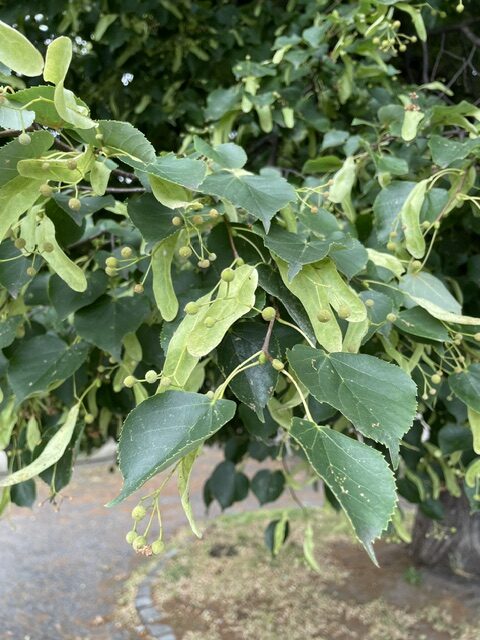
In mid-July, you can see flower parts all over the place, but nobody seems to care. Nobody is calling the trees “messy”. I see piles of debris in city parks and along sidewalks; and I have yet to hear or see a single backpack blower. Clearly, there is no budget for city landscaping.
When you walk through the neighborhood where I’m staying, you can enjoy the shade provided by the Tilias. As a kid born and living in Prague for the first ten years of my life, I had no idea what the trees were called. That came years later, when I became a professional landscaper in British Columbia. Tilias are called Ceska lipa in Czech, and the trees are common all over Europe.
Easy to identify
Tilias are easy to identify because they have flowers borne on extra bracts. And the flowers turn into drupes, which eventually drop to the ground. On the phone yesterday, I watched the bracts spin from the trees to the ground, just like maple samaras do. On Tilia cordata species, the flowers point up from the bract.
If you visit Europe, you will no doubt run into these trees. If you’re lucky, you’ll catch that brief moment when the flowers flood their surroundings in sweet fragrance. Enjoy it.
