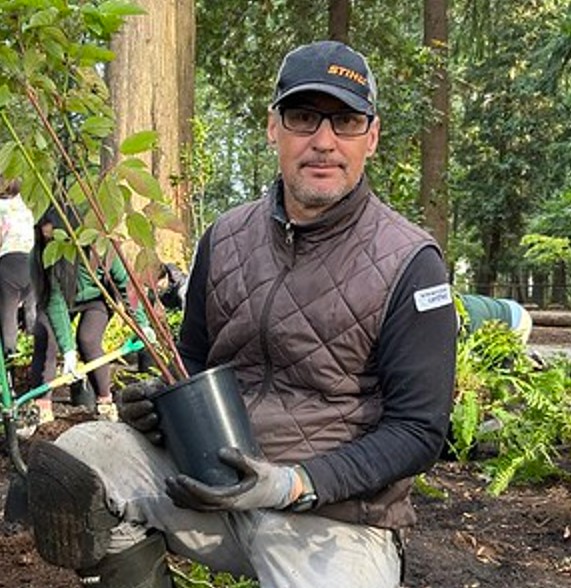
A bright future!
You’ve seen the ads before, I’m sure. A beautiful, young intern in a safety vest is happily bent over a planted bed, and her future is bright. No, it really is. There is plenty of work for hard-working people who don’t mind sweating and getting their hands dirty.
The girl is excited because she learned a lot during her internship, and people treated her well. She knows that there is demand for good, qualified people. Soon, she will land a good position somewhere and off-she goes, even if the pay is a bit low in the beginning.
The middle part
Now, the middle part of my career was a bit messy. I had to learn lots about machines, plants and handling people. My performance was really good, so I eventually moved up to landscape supervisor.
That post came with more responsibilities and barely some extra pay. But I did learn more; it was a nice stretch learning how to read the whole landscape and maintain it properly. It soon became obvious that handling people was the most challenging part. That’s because people walking into landscaping jobs are a crazy bunch. Very few of them plan to make landscaping their career. They need a job, it’s sunny outside, and training is provided. You don’t even need perfect English to work in landscaping.
As you move through your early seasons, you gain extra certifications, like the Landscape Industry Certified program in Canada and the US. You attend training seminars, and people usually start doing side jobs now that they have experience and they really notice the low pay compared to other skilled trades.
Then, kids come and your side-hustle starts to look like a side business. Your seasons in the field are piling up but life is good outside in the landscape.
Close to the end
As the seasons pile up and you notice more gray in your hair and beard, you broker your knowledge and experience into Red Seal journeyman horticulturist certification. Then it hits you that most landscape companies prefer to hire five Turks over one pricey journeyman. Yes, you should have developed your side-hustle into a full-blown oepration. Bi-weekly salaries put you to sleep.
Now comes the part where I explain why young interns make me mad. Picture me doing bedwork with three junior staffers on a colder November day, not many weeks away from Christmas.
I have extra layers on, two toques, I’m unshaved and slightly beat up at the end of another long season. My day-job boss shows up out of nowhere, walks up, stares at me, and says what I will remember for the rest of my days: “You’re too old! Yeah, you’re too old.” Then laughter ensues.
I wasn’t laughing, I was embarrassed. Too old? As if.
Action you can take
My advice to young interns is to plan ahead because one day their boss will also call them “too old” so he can hire cheaper, new interns, and start the cycle all over.
Your resume and social network should be humming from the beginning. Develop good contacts in your industry and stay in touch with people.
Personally, I doubled down on my side-hustle efforts, even if it meant working seven days a week. Your own show is better than therapy: you’re in charge, you make decisions, and crucially, I have yet to hear the words “you’re too old” from a single private client. That’s because I solve their problems without ruining their retirements. They couldn’t care less about the gray hair under my cap.
Never let one boss decide your value in the industry. And if you’re in a similar position as a person of a certain age, there is professional help you can get. Atrhur Brook’s excellent book “Strength to strength” shows you how to handle your inevitable career decline.
One last note: don’t be a bitch by reporting your boss to the Labour Board in Canada. Yes, technically speaking the boss is responsible for your physical and mental health on the job. However, I recommend taking good, positive, action.
While I can’t do much about my age, I can still learn, and find new private clients. I’m also publishing more, and that includes this blog. It’s a nice challenge: you can reinvent yourself.
“Too old?” Not likely.